Views: 0 Author: Site Editor Publish Time: 2026-06-17 Origin: Site
You finally unbox a highly anticipated product. Instead of experiencing delight, you discover damaged components. You might also notice a distinctly cheap presentation. Choosing the wrong internal packaging directly compromises product safety. It rapidly inflates your shipping expenses. Poor packaging also heavily damages brand perception during the critical unboxing phase.
While both EVA and EPE operate as closed-cell foams, they serve entirely different strategic purposes. We categorize them based on density variations. We also judge them by visual aesthetic requirements and underlying unit economics. The right choice prevents broken goods and dissatisfied customers.
This guide provides procurement and packaging design teams an objective framework. You will learn how to accurately evaluate EVA and EPE materials. We will explore specific performance data and structural limits. You will also understand key manufacturing constraints and relative economic profiles to make an informed decision.
EVA (Ethylene-Vinyl Acetate): Best for premium presentation, precise CNC routing, and high-density support for heavy or sensitive items (e.g., tools, medical devices). Higher unit cost.
EPE (Expanded Polyethylene): Best for high-volume shipping, superior multi-impact shock absorption, and cost-efficiency. Highly recyclable and lightweight.
The Deciding Factor: Your choice depends on whether the primary goal is maximizing the unboxing aesthetic (favoring EVA) or optimizing protective transit economics (favoring EPE).
Before selecting a material, you must understand its foundational chemistry. These structural differences dictate how each foam performs under stress. They also determine how the material feels in your hands.
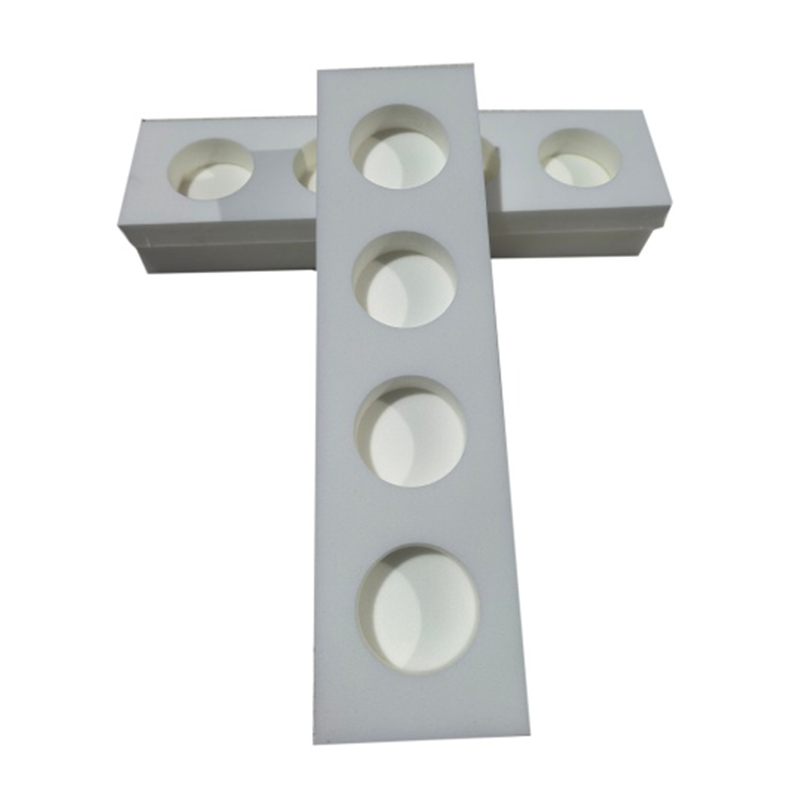
Ethylene-Vinyl Acetate combines two distinct chemical polymers. This combination creates a resilient copolymer block. It behaves much like natural rubber. The material boasts incredible elasticity and toughness. We typically see high density ranges here. Manufacturers produce EVA between 25 and 80 kg/m³. This density creates rigid structural integrity. It feels solid and substantial. The high vinyl acetate content softens the material without compromising its rigid core. You often see EVA Foam Packaging used in scenarios demanding strict spatial stabilization.
Expanded Polyethylene represents a non-crosslinked foam. Manufacturers heat raw polyethylene resin. They inject environmentally safe gases into the mixture. This expands the material into a cellular structure. EPE features a remarkably lightweight nature. It offers exceptional flexibility. Its density profile remains much lower than EVA. The tiny air bubbles inside the foam act as miniature shock absorbers. They compress easily under pressure. They rapidly rebound once you remove the load.
Neither material is universally superior. You cannot declare a definitive winner without context. Superiority strictly ties to the product's unique fragility curve. It also depends on your margin structure.
Assess the exact weight of the item.
Determine the acceptable drop height based on transit methods.
Calculate the target aesthetic value for the consumer.
Evaluating these factors prevents costly over-packaging. It also stops dangerous under-packaging.
Transit testing separates adequate packaging from exceptional packaging. Materials must survive rough handling. They must protect items against diverse environmental threats.
Drop testing measures how well packaging dissipates kinetic energy. When a box hits the ground, energy transfers inward. EPE excels at absorbing multiple impacts. It compresses deeply to cradle lighter, fragile items. The air cells cushion the blow across a wide surface area. In contrast, EVA provides rigid stabilization. It resists deep compression. This makes EVA perfect for heavier components. A dense tool could easily punch through soft EPE. EVA stops heavy items from shifting during transport.
Material recovery dictates reusability. EVA retains its custom-cut shape almost indefinitely. It bounces back from repeated use. This characteristic makes it ideal for reusable cases. We see this commonly in camera cases or medical kits. You can insert and remove items hundreds of times. The cavities remain perfectly snug. EPE behaves differently under prolonged stress. It may exhibit slight compression set over long-term exposure. Heavy loads left in EPE for months might permanently crush the cells slightly.
Moisture and chemical exposure ruin unprotected goods. Both foams boast excellent water resistance. Their closed-cell nature repels liquid. However, specific compliance scenarios require targeted treatments.
Moisture Resistance: Both repel water droplets effectively.
Chemical Resistance: EVA resists oils and greases better than standard EPE.
Thermal Resistance: Both survive normal transit temperature fluctuations.
Anti-Static (ESD): Electronics require specialized protection. Manufacturers can inject anti-static additives into both materials. This prevents electrostatic discharge from destroying sensitive microchips.
Best Practice: Always request an ISTA drop test protocol when shipping items over five kilograms.
Common Mistake: Relying on low-density EPE to secure sharp metal tools. The tools will likely slice through the soft foam during transit.
Designers must align material choices against fabrication realities. The production process drastically affects both lead times and aesthetic outcomes.
Fabrication methods define the final look. EVA proves highly suited for precise CNC routing. A computer-guided bit carves the foam block. This leaves impeccably clean, sharp edges. Complex multi-depth cavities become easy to achieve. EPE requires different handling. Facilities typically die-cut EPE. A heavy press stamps a steel rule die through the foam. Manufacturers also skive EPE. They slice it into thinner sheets. For deep cavities, they assemble EPE via heat lamination. They melt layers together to build thickness.
Internal cushioning must pair perfectly perfectly inside the outer shell. You frequently find EVA inside high-end rigid paper boxes. The tight dimensional tolerances of EVA prevent the insert from shifting. It creates a seamless display platform. You typically pair EPE Foam Packaging inside standard corrugated shippers. EPE also fits perfectly inside heavy-duty plastic transit totes. It flexes easily to accommodate slight variations in the outer carton.
Implementation realities dictate your launch schedule. CNC cutting for EVA requires almost zero upfront tooling costs. You simply program the machine. However, CNC involves longer per-unit machining time. It scales poorly for massive identical runs. Die-cutting EPE demands upfront mold costs. You must fabricate the steel cutting dies. Once ready, die-cutting scales exponentially faster. A machine stamps out thousands of units per hour. This makes EPE superior for high-volume execution.
Table 1: Manufacturing Considerations | |||
Fabrication Method | Primary Material | Tooling Investment | Production Speed |
|---|---|---|---|
CNC Routing | EVA | Minimal | Slow to Moderate |
Die-Cutting | EPE | Moderate | Extremely Fast |
Heat Lamination | EPE | Minimal | Fast |
Modern consumers care deeply about presentation. Unboxing videos heavily influence brand perception. Visual and tactile cues matter just as much as physical protection.
Tactile feedback sets expectations immediately. EVA delivers a smooth, premium finish. It feels slightly sponge-like but remarkably firm. The dense cellular structure appears almost uniform to the naked eye. It signals luxury. EPE presents a highly visible cellular structure. You can see the individual air bubbles. It projects a purely functional appearance. EPE feels crinkly and utilitarian. It screams industrial protection rather than premium display.
Visual alignment strengthens brand identity. EVA supports vibrant, custom color matching. You can dye it almost any Pantone shade. It also accepts premium surface treatments readily. Brands frequently apply flocking. Velvet lamination over EVA creates a jewelry-box aesthetic. This drastically elevates brand perception. EPE lacks this versatility. It generally remains limited to standard industrial colors. You mostly see white and black. Manufacturers occasionally produce pink EPE to signify anti-static properties. You cannot easily flock or laminate EPE due to its flexible nature.
Selecting materials requires a strict analysis of unit economics. You must balance protective capabilities against raw material outlays and shipping multipliers.
We must establish the absolute baseline. EPE serves as a highly cost-effective option per cubic meter. Its production process uses less raw resin. The gas expansion process creates volume efficiently. EVA requires significantly more dense polymer per cubic meter. This intrinsically raises its baseline unit cost. High-density EVA variations cost substantially more than low-density EPE variations.
Shipping carriers charge based on dimensional weight. They penalize heavy, bulky packages. The lightweight nature of EPE provides a massive advantage here. EPE reduces the overall gross weight of the final carton. At scale, this directly reduces dimensional shipping costs. These logistics savings frequently offset initial packaging investments entirely. Heavy EVA inserts add measurable weight. If you ship thousands of units via air freight, this added weight severely impacts your margins.
You need a framework to justify premium material investments. Spending more on packaging must yield tangible returns. Justify EVA when the product margin remains exceptionally high. Luxury watches or high-end electronics easily absorb the premium. Justify EVA if the packaging serves as a permanent storage case. Consumers keep the box to store the item. Justify EPE when margin compression is tight. Fast-moving consumer goods require the raw efficiency of EPE to remain profitable.
Making the final call requires synthesizing all performance, aesthetic, and economic variables. Use this structured logic to narrow down your selection.
You should immediately shortlist EPE if your project meets these exact criteria:
High-volume e-commerce shipping: You need fast die-cutting and lightweight logistics.
Fragile consumer goods: Items like glassware or ceramics need deep, multi-impact cushioning.
Eco-friendly mandates: EPE categorizes as a #4 PE plastic. It recycles easily through standard municipal streams.
Cost-sensitive supply chains: You require maximum volume protection for minimal material expenditure.
You should confidently select EVA if your project aligns with these premium requirements:
Luxury and presentation: Unboxing aesthetics directly drive your brand loyalty and repeat purchases.
High-end consumer electronics: Heavy devices need rigid blocking to prevent internal carton shifting.
Precision instruments: Medical devices and measurement tools require exact CNC-routed cavities.
Custom transit cases: The Foam Insert must survive years of repeated tool removal and insertion without losing shape.
The final choice between EVA and EPE comes down to balancing opposing forces. You must weigh aesthetic presentation against raw protective efficiency. You must balance rigid stabilization against flexible shock absorption. EVA dominates the luxury and reusable sectors. It provides unmatched visual appeal and precise shaping. EPE completely dominates high-volume transit. It delivers exceptional shock absorption and logistics efficiency.
We encourage decision-makers to take action immediately. First, request physical prototypes of both materials from your supplier. Second, conduct actual drop-testing using your specific product inside each cavity. Finally, audit your manufacturer's specific CNC and die-cut capabilities to ensure they can meet your timeline. Real-world testing remains the only way to guarantee ultimate package performance.
A: Yes. Manufacturers can easily treat both materials with specific anti-static additives during the initial foaming process. Electronic component manufacturers commonly use these pink-colored, ESD-safe inserts to prevent electrical damage during shipping.
A: EPE generally proves easier to recycle. Facilities typically classify it as #4 LDPE. It breaks down easily in standard municipal recycling streams. EVA features a more complex copolymer structure. It usually requires specialized recycling facilities to process properly.
A: Yes. Many brands utilize a highly effective hybrid approach. They use cost-effective EPE for the deep bottom cushioning layer. They then laminate a thin layer of precise, cleanly routed EVA on top. This delivers premium visual presentation alongside excellent shock absorption.