Views: 0 Author: Site Editor Publish Time: 2026-06-28 Origin: Site
Transit damage ruins products and wrecks your bottom line. You ship a pristine item, but the customer receives shattered pieces. The resulting impact triggers expensive replacement costs. It complicates reverse logistics and causes severe brand reputation degradation. Standard void fill often causes these systemic failures. Materials like bubble wrap and packing peanuts simply cannot secure high-value or highly calibrated items. They settle significantly over long freight journeys. Products shift inside the carton and sustain heavy damage.
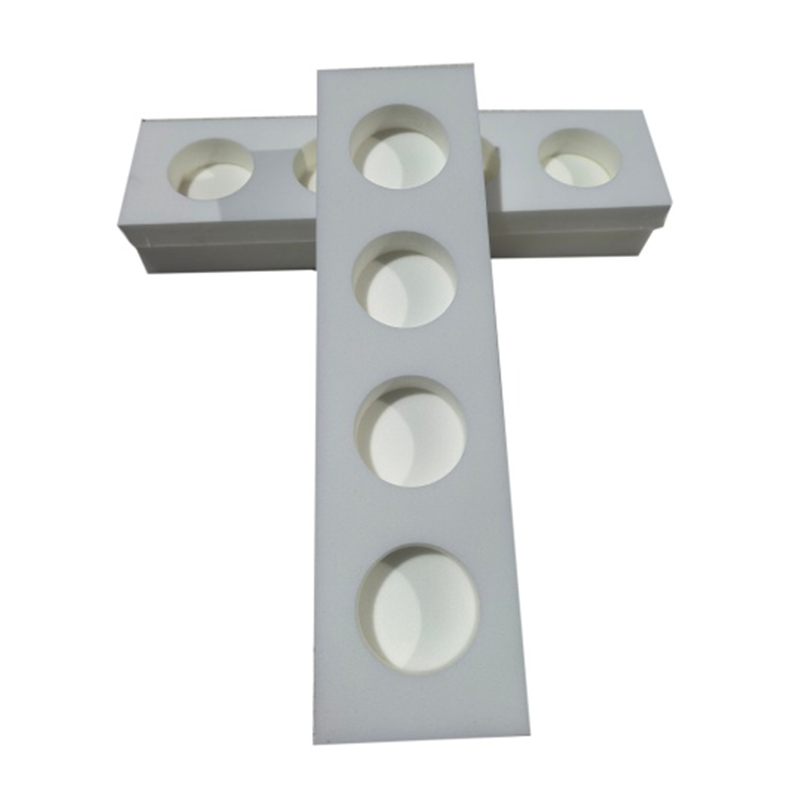
You need a much more reliable strategy to protect delicate shipments. Enter the custom-engineered Foam Insert. It provides a measurable, scientifically sound solution for shock absorption and vibration damping. We will explore how exact-fit foam secures items perfectly inside outer cartons. You will learn the mechanical physics behind drop survival. We will also help you navigate material selection and fabrication methods to ensure absolute transit safety.
Custom foam eliminates internal product migration by creating a mathematically fitted, controlled movement system within the shipping carton.
Material selection directly dictates performance; choosing between EPE and EVA depends on product weight, fragility, and drop-test requirements.
The upfront tooling and design costs of custom inserts are typically offset by the reduction in return merchandise authorizations (RMAs) and damaged goods.
Proper evaluation requires aligning fabrication methods (die-cut, CNC, waterjet) with production volume and tolerance requirements.
Shipping environments subject packages to chaotic forces. Parcels experience multi-directional impacts along complex supply chains. Freight trucks generate sustained, low-frequency vehicle vibrations. Sorting facilities introduce sudden lateral shocks via conveyor belts. Couriers routinely drop boxes from waist height. These dynamic forces transfer directly into packaged goods. Unprotected items absorb this kinetic energy completely. The structural integrity of fragile components rapidly deteriorates under such extreme stress.
Generic void fill fails miserably over long distances. Loose-fill peanuts and standard air pillows succumb to constant compression. They settle into the bottom of shipping cartons. This settling creates dangerous empty pockets. The product then experiences uncontrolled internal movement. We call this phenomenon "box-level shaking." The item repeatedly strikes the inner walls of the rigid corrugated box. Over thousands of miles, these repetitive micro-impacts destroy sensitive internal mechanisms. Cosmetic finishes rub against cardboard and suffer irreversible scuffing.
Successful transit packaging leaves nothing to chance. It requires measurable parameters and proven testing validation. You must define clear success criteria before shipping valuable goods.
Zero Movement: The internal cavity must completely immobilize the product.
Predictable G-Force Mitigation: The packaging must dissipate kinetic energy before it reaches the item.
ISTA Compliance: The final package must pass rigorous ISTA testing standards. Tests like ISTA 3A simulate real-world drops, shocks, and vibrations.
Engineers design packaging to handle two entirely different physical threats. First, packages must survive continuous, low-level vibration. Second, they must survive sudden, high-impact drops. We differentiate these concepts as shock absorption and impact resistance. Shock absorption dampens the rattling energy from truck beds. The foam cells compress and expand slightly to isolate the product. Impact resistance handles sheer drop force. When a box hits the concrete floor, the engineered material crushes at a controlled rate. It slows down the deceleration curve. The product avoids catastrophic G-force spikes.
Cosmetic damage ruins the customer unboxing experience. Polished metals, glass screens, and painted components require pristine surface protection. Non-abrasive foam profiles prevent cosmetic damage effectively. The soft cellular structure avoids scratching delicate finishes. It creates a gentle friction barrier around the item. You eliminate the dreaded scuff marks caused by harsh corrugated cardboard friction.
Brilliant packaging designs utilize structural synergy. An engineered insert distributes external force evenly across the strongest points of your product. It protects fragile extremities completely. Imagine shipping a complex medical device. The foam cradle grips the solid metal chassis securely. It suspends fragile plastic dials and glass lenses away from the box walls. The energy bypasses the weak points entirely. The entire packaging assembly acts as a unified shock-absorbing ecosystem.
Material selection defines the ultimate success of your packaging strategy. You must evaluate various chemical compositions against your specific transit requirements. Let us explore the dominant materials used in modern industrial protection.
Characteristics: This material offers high resilience and excellent shock absorption. It remains remarkably lightweight. The closed-cell structure rebounds quickly after repeated impacts. It boasts highly recyclable properties, making it an eco-conscious choice.
Best For: Engineers favor EPE Foam Packaging for mid-to-heavy industrial parts. It dominates electronics shipping applications. Use this material for multi-impact scenarios requiring strict cost-efficiency.
Characteristics: This blend provides incredibly high density and a smooth aesthetic finish. It delivers superior compression resistance under heavy loads. The fine cellular structure offers a premium tactile feel.
Best For: Designers specify EVA Foam Packaging for high-value consumer goods. It supports medical devices requiring strict particulate control. Choose this option for presentation-focused unboxing experiences.
Feature | Expanded Polyethylene (EPE) | Ethylene-Vinyl Acetate (EVA) |
|---|---|---|
Density Level | Low to Medium | Medium to High |
Shock Absorption | Excellent for repeated impacts | Good, but stiffer response |
Visual Appeal | Utilitarian, standard texture | Premium, ultra-smooth finish |
Cost Profile | Highly cost-efficient | Premium investment |
We must briefly touch on open-cell Polyurethane (PU). PU offers an extremely lightweight profile. It cradles highly fragile, low-weight items perfectly. You might also encounter "foam-in-place" or in-situ packaging. This method uses expanding liquid chemicals inside a bag. It makes logistical sense for high-mix, low-volume operations. However, pre-fabricated inserts offer vastly superior precision and repeatability.
Regulated industries operate under unforgiving constraints. Medical device shipping requires strict compliance protocols. Precision instruments cannot endure even microscopic shifts. We must prevent recalibration issues during transit. A dropped laser level or ultrasound probe becomes useless if internal optics misalign. Furthermore, many electronic instruments mandate anti-static (ESD) requirements. Pink anti-static foams dissipate electrical charges safely. They protect sensitive circuit boards from catastrophic electrostatic shocks.
Maximum durability demands hybrid solutions. We often integrate custom-fabricated soft internal inserts inside a rigid outer shell. Heavy-duty pelican-style cases provide impenetrable exterior armor. The hard plastic deflects puncture hazards and massive crush forces. The internal foam absorbs the residual kinetic energy. This dynamic combination ensures military-grade protection. It secures vital gear deployed into rugged, unpredictable environments.
Freight environments lack climate control. Cargo containers endure blistering summer heat and freezing winter temperatures. You must address temperature stability assumptions when deploying protection. High heat softens certain plastics. Freezing temperatures turn some materials brittle. Furthermore, moisture resistance plays a crucial role. Closed-cell materials repel water efficiently. They prevent mold growth and structural degradation during humid ocean transits.
Your chosen fabrication method dictates lead times and precision. You must align the manufacturing style to your specific project needs.
Die-Cutting: A steel rule die stamps shapes out of raw sheets. It suits high-volume production perfectly. It requires higher upfront tooling costs.
CNC Routing: Computer-controlled drill bits carve out exact 3D contours. It offers incredible precision and requires zero tooling fees. It suits prototyping and low-volume runs perfectly.
Waterjet Cutting: A high-pressure stream of water slices through thick materials seamlessly. It provides incredibly clean edges. It handles extremely dense sheets effortlessly.
Engineers often make critical design errors. Over-engineering ranks as the most common mistake. Using excessively dense material harms light products. A rigid block transfers shock directly instead of absorbing it. The product shatters inside its supposedly safe cradle. Another common failure involves ignoring dimensional tolerances. You must measure the inner dimensions of the outer corrugated box precisely. An insert sized incorrectly will float inside the box. It renders the entire protective strategy useless.
Evaluate the break-even point for custom design fees versus standard packaging. Prototyping incurs upfront engineering hours. However, standard packaging drives up hidden labor costs. Warehouse workers spend minutes wrapping products manually. Pre-engineered solutions drop into the box instantly. The labor savings offset the design fees rapidly. Furthermore, eliminating RMAs saves massive reverse logistics expenses. High volumes quickly justify any initial tooling investments.
Selecting the right vendor determines your project outcome. You need a partner capable of solving complex engineering challenges. Use this checklist to vet potential suppliers thoroughly.
Engineering Capabilities: Do they offer robust CAD design? Can they supply rapid prototyping? Ensure they provide comprehensive drop-test validation to prove their designs work.
Material Agnosticism: Ensure the vendor recommends materials based strictly on drop-test data. Avoid partners pushing a single in-house material capability just to secure the sale.
Scalability: Can the vendor transition smoothly from low-volume CNC prototypes to high-volume die-cut production? They must grow seamlessly alongside your manufacturing output.
Product safety during transportation represents a complex engineering challenge. It is never just a simple procurement line item. Ignoring transit physics invites catastrophic financial losses and brand damage. The right custom insert transitions shipping from a chaotic, variable risk into a highly controlled, predictable process. You stop guessing and start measuring. We strongly recommend initiating a comprehensive packaging audit immediately. Request a custom prototype based on your highest-risk SKU. Test the solution rigorously. You will quickly see the dramatic drop in transit damages and customer complaints.
A: Costs vary entirely based on complexity and your chosen manufacturing method. CNC routing requires zero tooling fees, making it perfect for prototyping. Conversely, die-cutting requires purchasing physical steel plates. These plates represent an upfront investment but lower the per-unit cost significantly during high-volume production runs.
A: Yes. Engineered foam represents the primary, most reliable method for passing standardized ISTA drop and vibration tests. Engineers calculate exact densities and cushioning curves to guarantee the package dissipates shock safely. It mitigates G-forces precisely to meet strict laboratory requirements.
A: These are petroleum-based realities. However, EPE is highly recyclable and frequently melted down for reuse. Both materials support closed-loop supply chains exceptionally well. Companies often reuse these durable inserts for hundreds of trips between facilities, heavily offsetting their initial carbon footprint.
A: MOQs depend heavily on the specific fabrication method chosen. CNC routing processes allow for extremely low minimums, often starting at just a few dozen units. Die-cutting requires much higher MOQs to justify the machine setup time and the steel rule die investment.