Views: 0 Author: Site Editor Publish Time: 2026-06-17 Origin: Site
Every traveler eventually faces the same luggage dilemma. You want lightweight mobility, but you also need reliable environmental protection and structural strength. Often, buyers fall into the trap of confusing "waterproof" marketing claims with actual "water-resistant" performance. We see this confusion regularly when people shop for fabric luggage. Moisture breaches ruin expensive electronics, while unnecessarily heavy bags trigger frustrating airline weight limits.
Our objective is to provide a transparent, evidence-based evaluation framework. We will help you select the right Oxford Cloth Travel Bag for your specific needs. You will learn exactly how to weigh fabric density against practical transit limitations. We will clarify what truly keeps your gear dry during a heavy downpour. Whether you need a single reliable carry-on or are sourcing wholesale luggage solutions, this guide equips you with the facts. You will understand how fabric coatings, denier counts, and modern composite materials work together effectively.
"Water-resistant" Oxford cloth relies on DWR (Durable Water Repellent) or internal PU/PVC coatings; it handles light rain, not submersion.
Durability is dictated by Denier (D) count—higher counts (e.g., 600D, 1680D) offer superior abrasion resistance at the cost of added weight.
Integrating EVA soft-shell components bridges the gap between flexible fabric and impact-resistant hard luggage.
For bulk or custom orders, buyers must evaluate printability, coating consistency, and stitch density alongside fabric quality.
Manufacturers frequently use "waterproof" and "water-resistant" interchangeably. This creates a dangerous misunderstanding for consumers. True waterproof luggage remains completely impervious to moisture. You can fully submerge a waterproof dry bag underwater without damaging the contents. Water-resistant luggage operates quite differently. It uses hydrophobic properties to delay moisture penetration. An Oxford fabric bag effectively sheds light rain and accidental spills. It will eventually soak through during a prolonged monsoon.
The secret to this moisture resistance lies beneath the surface. Woven Oxford fabric alone absorbs water quickly. Manufacturers apply internal polyurethane (PU) or polyvinyl chloride (PVC) coatings to solve this. These synthetic layers act as a physical barrier behind the tight fabric weaves. When rain hits the exterior, the durable water repellent (DWR) treatment forces water to bead up and roll off. The internal coating stops any residual dampness from reaching your belongings.
Fabric represents just one part of the weatherproofing equation. Moisture typically breaches luggage through the zippers and seams. Water easily travels through standard zipper teeth and tiny needle holes. To combat this, you need taped internal seams. You also need waterproof zippers, such as the widely respected AquaGuard system. Selecting an Oxford Cloth Travel Bag for Trips requires closely inspecting these specific hardware components. Even the thickest coated fabric fails if the zipper leaks during a storm.
Finally, buyers must understand that water-repellent treatments degrade over time. Constant friction from luggage carousels slowly rubs away exterior DWR layers. Extended UV exposure from sunlight dries out internal PU coatings. They can eventually crack or flake off. Regular maintenance helps extend this lifespan significantly. You should re-apply commercial DWR sprays annually. Store your luggage in cool, dry environments to preserve the internal synthetic barriers.
When you evaluate fabric strength, you inevitably encounter the Denier (D) metric. Denier measures the linear mass density of the fibers used in the weave. A higher number indicates thicker, sturdier individual threads. Understanding this metric helps you match the fabric directly to your travel habits. A 210D fabric feels entirely different from a 1680D fabric.
Low-to-mid denier fabrics range from 210D to 400D. These materials work best for packable, lightweight secondary bags. They fold easily into main luggage compartments. Heavy-duty materials range from 600D to 1680D. These thicker weaves resist punctures and severe abrasions. They represent the baseline standard for primary check-in bags. Baggage handlers throw transit luggage onto rough concrete and metal belts. High-denier Oxford cloth survives these harsh impacts.
However, this added strength introduces a strict trade-off. Exceptional tear strength significantly increases the base weight of the empty bag. Airlines enforce strict weight limits for both checked and cabin baggage. Selecting a massive 1680D bag eats into your packing allowance. Smart buyers balance durability against maneuverability. A 600D fabric often provides the perfect middle ground for overhead carry-on luggage.
Many consumers seek "Buy It For Life" (BIFL) products. Achieving true longevity in a Durable Oxford Cloth Travel Bag goes beyond fabric thickness. The weakest links determine the actual lifespan. You must evaluate the stitching at critical stress points. Shoulder strap connections require reinforced bar-tack stitching. Hardware choices matter immensely. Solid metal D-rings and clasps outperform brittle plastic alternatives. A 1680D bag falls apart quickly if the manufacturer uses weak cotton thread.
Denier Count | Fabric Weight | Abrasion Resistance | Ideal Travel Application |
|---|---|---|---|
210D - 400D | Ultra-Light | Low to Moderate | Packable daypacks, gym bags, secondary totes. |
600D - 900D | Medium | High | Standard carry-on luggage, commuter backpacks. |
1000D - 1680D | Heavy | Extreme | Checked transit luggage, rugged expedition gear. |
Modern travelers face conflicting packing requirements. Pure fabric bags lack structural rigidity. They offer zero impact protection for laptops, cameras, and fragile souvenirs. Conversely, hard-shell plastic suitcases present their own frustrating problems. Hard plastics cannot stretch to accommodate extra items. They frequently suffer irreversible cracking when dropped on sharp corners by airport personnel.
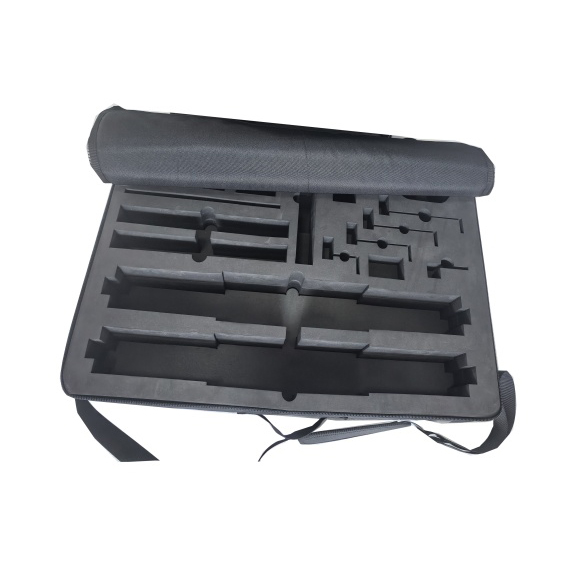
Manufacturers solved this structural dilemma by introducing composite designs. The EVA Soft-Shell Carry Oxford Cloth Travel Bag offers a distinct structural advantage. Ethylene-Vinyl Acetate (EVA) is a dense, rubber-like polymer. Factories mold this material into impact-absorbing chassis panels. They wrap these internal protective panels in abrasion-resistant Oxford cloth. The resulting luggage provides rigid armor where you need it most.
This hybrid construction absorbs kinetic energy rather than shattering upon impact. If someone drops your bag, the EVA core flexes slightly. The exterior fabric resists scuffing against the pavement. You get the protective benefits of a hard suitcase alongside the durability of a woven textile.
This design fits specific travel scenarios perfectly. It excels during carry-on business travel. Business professionals carry expensive tech equipment daily. They also need flexibility to squeeze luggage into crowded overhead bins. The fabric exterior provides exterior pockets for quick passport access. The internal EVA shell ensures the laptop screen inside survives turbulent flights intact.
Procurement teams and wholesale buyers evaluate luggage very differently than individual retail customers. Corporate gifting programs and brand merchandising require strict quality control at scale. When you purchase hundreds of units, you cannot afford inconsistent manufacturing. Wholesale purchasing demands a rigorous, structured evaluation of the supply chain.
Printability stands out as a critical factor for branded merchandise. The chemical backing applied to Oxford cloth heavily influences logo application. PVC and PU coatings react differently to intense heat. Screen printing offers a cost-effective, highly durable solution for simple logos on Oxford fabrics. Heat transfer printing handles complex, multi-colored artwork beautifully. However, extreme heat transfer temperatures can melt cheaper fabric coatings. You must test branding methods carefully.
Supply chain variables dictate the success of any bulk order. You must demand transparency from manufacturers before finalizing a Custom Oxford Cloth Travel Bag. Always establish the following criteria upfront:
Minimum Order Quantities (MOQs): Balance required volumes against unit economics. Lower MOQs reduce inventory risk but increase the per-unit expense.
Colorfastness Ratings: Demand high ratings for UV and wash resistance. Cheaply dyed Oxford cloth fades rapidly in direct sunlight, diminishing brand presentation.
Coating Consistency: Inspect fabric samples for uniform coating application. Avoid cheap PVC backings. They often suffer from toxic off-gassing and brittle flaking in cold weather.
Stitch Density Verification: Specify the exact number of stitches per inch. Higher density prevents seam separation under heavy corporate use.
Evaluating countless luggage options quickly becomes overwhelming. You need a streamlined method to identify the best product. Use this concise checklist to finalize your evaluation. Compare these success criteria directly against your upcoming itineraries.
Transit Style: Match the bag structure to the transport method. Choose an EVA hybrid 600D bag for overhead carry-on convenience. Select a reinforced 1680D base model for checked baggage thrown into cargo holds.
Climate Realities: Assess typical weather exposure. Standard PU-coated Oxford handles city commuter drizzles perfectly. A specialized tarpaulin-lined base becomes necessary for heavy weather exposure and muddy environments.
Repairability: Fabric luggage offers excellent long-term functionality. Tailors can patch torn Oxford cloth easily. Repair shops can replace broken zippers. This repairability outlasts cracked hard plastics, which usually end up in landfills.
Never rely solely on product photos. Look closely at customer feedback regarding zipper longevity and strap comfort. Pay attention to how the fabric behaves after six months of active use. The ideal travel companion balances robust materials with practical daily functionality.
Selecting the ideal Oxford cloth travel companion requires looking past marketing buzzwords. You must align the Denier count, internal coating type, and structural design directly with your travel reality. Water-resistant coatings provide essential protection against the elements, provided you maintain them properly. Integrating EVA structural panels delivers modern impact protection without sacrificing the inherent flexibility of woven fabrics.
Take actionable steps before making your final purchase. Individual buyers should scrutinize warranty coverage and local repair policies. Confirm the manufacturer uses recognized waterproof zipper systems. Procurement teams must request physical fabric swatches. Verify print adhesion and hardware quality before committing to large production runs. Diligent evaluation guarantees your gear remains protected across thousands of travel miles.
A: No. Machine washing destroys the internal PU or PVC protective coatings. The aggressive agitation ruins the bag's structural integrity. Hot water melts seam tape and degrades DWR treatments. You should spot clean stains using a soft brush, mild soap, and cold water. Let the bag air dry completely in a shaded area.
A: The lifespan depends entirely on travel frequency, UV exposure, and physical abrasion. Heavy users might see water repellency diminish within two years. Sun exposure dries out internal synthetic layers. You can easily restore the exterior water resistance by applying a commercial DWR fabric spray annually.
A: Oxford and nylon serve different purposes. Oxford cloth generally feels heavier and heavily textured. It offers a premium matte aesthetic and exceptional scuff resistance, making it ideal for rugged luggage. Nylon feels significantly lighter and smoother. Nylon works better for ultra-lightweight backpacking, while Oxford excels in structured travel transit.