Views: 0 Author: Site Editor Publish Time: 2026-06-08 Origin: Site
Choosing the right luggage often feels like an impossible compromise. Hard-shell cases offer excellent exterior protection. However, they add unnecessary bulk and weight. They frequently crack under rough airline handling. Standard nylon bags solve the heavy weight issue. Yet, they tear easily during daily transit.
You need a reliable middle ground for modern travel. An Oxford Cloth Travel Bag delivers exactly this. It perfectly balances high tensile strength and a low baseline weight. Frequent travelers and daily commuters rely on them heavily. They withstand brutal transit conditions effortlessly.
This article provides a skeptical, evidence-based evaluation framework. We will help you cut through low-grade marketing claims. You will learn how to identify authentic, high-denier durability. We guide you toward making an informed luggage upgrade. You will understand exactly why this material dominates the travel industry.
Structural Advantage: Oxford cloth utilizes a specific basket-weave technique that intrinsically prevents tears from expanding, maximizing longevity without adding material weight.
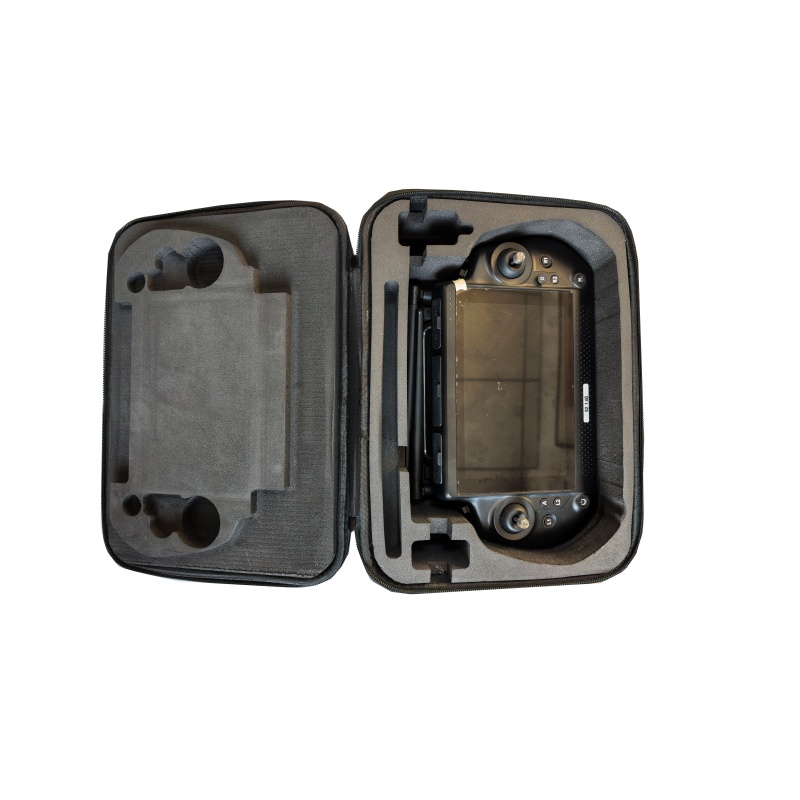
Hybrid Innovation: Combining Oxford fabric with EVA foam creates impact-resistant soft-shells that rival hard plastic performance at a fraction of the weight.
Evaluation Metrics: True durability relies on verifying Denier ratings (e.g., 600D vs. 210D), PU/PVC backing for weather resistance, and reinforced seam stitching.
Scalable Customization: For corporate or brand buyers, Oxford cloth offers superior print adaptability and structural consistency compared to canvas or standard polyester.
Oxford fabric relies on a highly engineered structural design. Manufacturers weave the material using an over-and-under basket-weave process. Two or more warp threads cross over an equal number of weft threads. This creates a recognizable checkerboard grid. It naturally breathes while maintaining extreme density. This grid resists tearing effectively. If a sharp object punctures the surface, the interlocking threads stop the damage. The grid prevents the tear from expanding outward. The localized damage stays fully contained. This maximizes overall longevity. It adds zero extra material weight to your load.
Luggage brands frequently advertise Denier ratings. Denier measures the actual thickness and weight of individual fabric fibers. A higher number indicates thicker, heavier, and stronger threads. Understanding these ratings prevents poor purchasing decisions. Lower numbers suit interior linings. Higher numbers handle aggressive external transit environments.
Denier Grade | Common Application | Durability Level |
|---|---|---|
210D | Interior bag linings, lightweight packable totes | Low (Prone to external abrasion) |
420D | Daily commuter backpacks, gym duffels | Medium (Balances weight and daily wear) |
600D - 1680D | Heavy-duty transit luggage, tactical gear | High (Maximum tear and puncture resistance) |
Raw Oxford fabric resists water naturally. However, it is not completely waterproof alone. Heavy rain will eventually penetrate untreated woven threads. Reputable manufacturers must apply secondary chemical coatings. They bond Polyurethane (PU) or Polyvinyl Chloride (PVC) to the interior backing. This invisible layer blocks moisture entirely. It transforms a porous fabric into a formidable weather shield. You must verify these internal coatings before purchasing.
Many consumers believe hard plastics guarantee complete travel safety. Standard Acrylonitrile Butadiene Styrene (ABS) plastic often fails in real-world scenarios. Cold temperatures make ABS plastic extremely brittle. Baggage handlers drop cases on frozen concrete tarmacs. These sudden impacts cause immediate stress-cracking. Once a hard shell cracks, structural integrity vanishes completely. You cannot repair a shattered plastic suitcase. It becomes entirely useless mid-trip.
Fabric offers superior functional flexibility. An Oxford Cloth Travel Bag for Trips absorbs sudden impacts beautifully. The woven fibers stretch slightly under pressure. They bounce back rather than shattering. The material expands around irregular packing shapes. You can pack bulky sweaters or rigid souvenirs easily. This flexibility directly reduces zipper blowouts. You can also stuff soft bags into tight airplane overhead bins. Rigid plastic cases stubbornly refuse to compress.
Strict airline carry-on limits demand lightweight luggage. Hard cases consume precious weight allowances before you pack anything. We can compare an empty 40-liter hard case against a fabric equivalent. The structural frame of plastic requires heavy internal hinges. Fabric construction removes this unnecessary hardware.
Metric | Standard 40L Hard Case (ABS) | Standard 40L Oxford Bag (600D) |
|---|---|---|
Empty Weight | 3.5 kg (7.7 lbs) | 1.2 kg (2.6 lbs) |
Impact Response | Rigid, high risk of cracking | Shock-absorbent, tear-resistant |
Storage Flexibility | Fixed dimensions | Compressible for small spaces |
Ethylene-Vinyl Acetate (EVA) foam fundamentally changes luggage construction. Manufacturers integrate dense EVA foam panels directly behind the Oxford cloth exterior. This creates a powerful hybrid architecture. It combines the best traits of soft and hard materials. The foam acts as a lightweight armor shield. The exterior fabric provides a tough, abrasion-resistant skin. The internal foam absorbs massive kinetic energy upon impact.
This hybrid design yields impressive structural results. It significantly outperforms traditional single-layer bags.
It provides the rigid structural protection of a hard case.
It securely shields delicate laptops and fragile electronic items.
It retains the high abrasion resistance of woven fabric.
It maintains the professional aesthetic appeal of premium textiles.
It prevents the outer shell from crushing under heavy top loads.
An EVA Soft-Shell Carry Oxford Cloth Travel Bag is a functional game-changer. It serves frequent business travelers perfectly. These professionals require constant tech protection. They despise bulky, noisy wheeled luggage. They prefer carrying sleek, organized bags through crowded terminals. This specific build delivers ultimate transit confidence. It blends into professional boardroom settings seamlessly. It survives rugged taxi trunks effortlessly.
A Durable Oxford Cloth Travel Bag requires robust hardware. Premium fabric cannot guarantee longevity alone. Weak structural components cause catastrophic travel failures. A bag is only as strong as its weakest zipper or strap. Hardware ultimately dictates the actual lifespan of your luggage. You must evaluate these elements rigorously.
Smart buyers look past the primary fabric. They inspect the structural foundations. You should mandate these specific features during your evaluation process.
Coating Quality: Seek PU coatings over traditional PVC. PU flexes remarkably well in freezing weather. PVC becomes brittle and cracks over time. PU also meets stricter global environmental compliance standards.
Stitching Density: Inspect all load-bearing stress points. Shoulder strap anchors require heavy thread reinforcement. Look for tight bar-tack stitching. Dense cross-stitching also prevents tearing under heavy cargo loads.
Hardware Compatibility: High-tension fabric needs heavy-duty zippers. Ensure manufacturers use YKK zippers or equivalent branded tracks. Cheap unbranded zippers derail quickly under tight packing pressure. Check for reinforced metal D-rings on shoulder straps.
Organizations face unique challenges when sourcing large volumes of gear. You might source corporate retreat gifts. You might develop athletic team gear. You may even launch a retail private label line. Selecting the correct base fabric is absolutely critical. It dictates the success of your entire project.
Oxford fabric adapts beautifully to complex corporate branding. It outperforms competing materials consistently.
It accepts detailed silk-screen printing effortlessly without bleeding.
Thermal heat transfers adhere permanently to the tight weave.
Heavy logo embroidery works perfectly without distorting the fabric.
Loose cotton canvas often causes unsightly puckering around embroidered logos. Slippery nylons reject complex ink prints. Oxford stays crisp, flat, and highly professional under any branding application.
A Custom Oxford Cloth Travel Bag scales exceptionally well in mass production. However, supply chain realities demand careful attention. Minimum Order Quantity (MOQ) expectations vary widely by factory. Custom colors require larger fabric dye batches. Color-fastness consistency remains crucial across these large runs. You must also account for manufacturing lead times. PU-coated materials require proper chemical curing periods before assembly. Plan your procurement cycles accordingly to avoid rushed defects.
Oxford fabric successfully bridges a critical gap in the luggage market. It delivers daily-carry comfort alongside rigorous transit durability. The basket-weave architecture stops tears instantly. Dense EVA foam integration protects fragile electronics effectively. You no longer need to compromise between weight and protection.
Take direct action before your next purchase. Verify the Denier rating of any shortlisted bag. Inspect the internal PU coatings for proper weather resistance. Check stress-point stitching for bar-tack reinforcement. If you represent an organization, reach out to a trusted manufacturing partner. You can develop a targeted prototype that meets your exact transit specifications.
A: It is highly water-resistant, not fully waterproof. Complete waterproofing depends entirely on taped seams and the quality of the internal PU or PVC backing. The raw woven fabric alone will eventually absorb heavy rain. Always check for internal protective coatings.
A: Cordura generally offers higher extreme abrasion resistance for military applications. However, Oxford cloth is significantly lighter and much more cost-effective. It remains perfectly sufficient for 95% of standard airline travel and daily commuting needs.
A: Never use a washing machine. Violent agitation degrades the water-resistant PU coating. It will also permanently warp the internal EVA foam structure. Spot-clean the exterior with a mild detergent and a soft brush. Always let it air dry naturally.